Healthy eating, the way you actually live
Healthy eating is not complicated. We follow the plate method, lean on mainstream evidence, and step back where you decide — because only you can keep this up for life.
01 — The base
Most of healthy eating fits on one plate
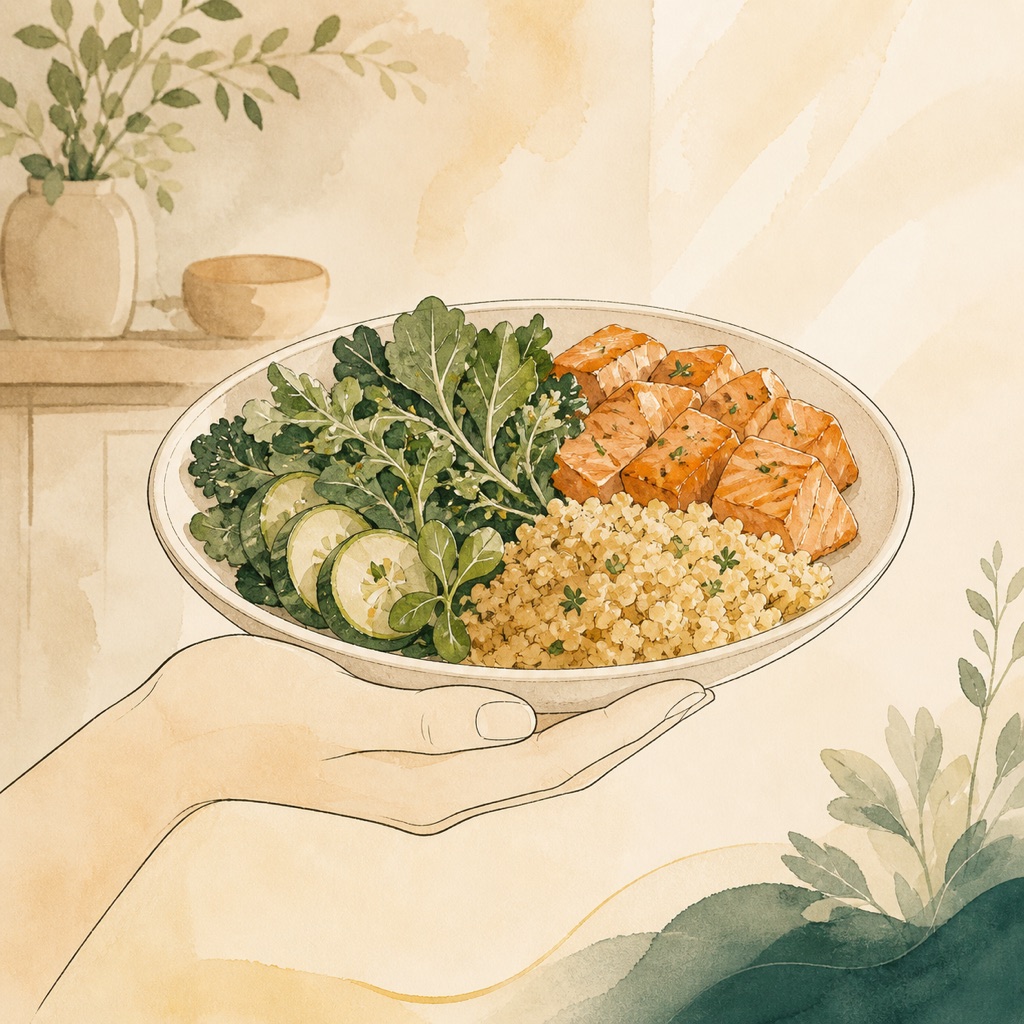
We start every recommendation with the plate, not a number. Half vegetables and fruit, a quarter protein, a quarter higher-fiber carbs — that single picture covers most of what mainstream guidelines [1] actually say.
1/2
Vegetables and fruits
These add volume, color, fiber, and nutrients to the meal.
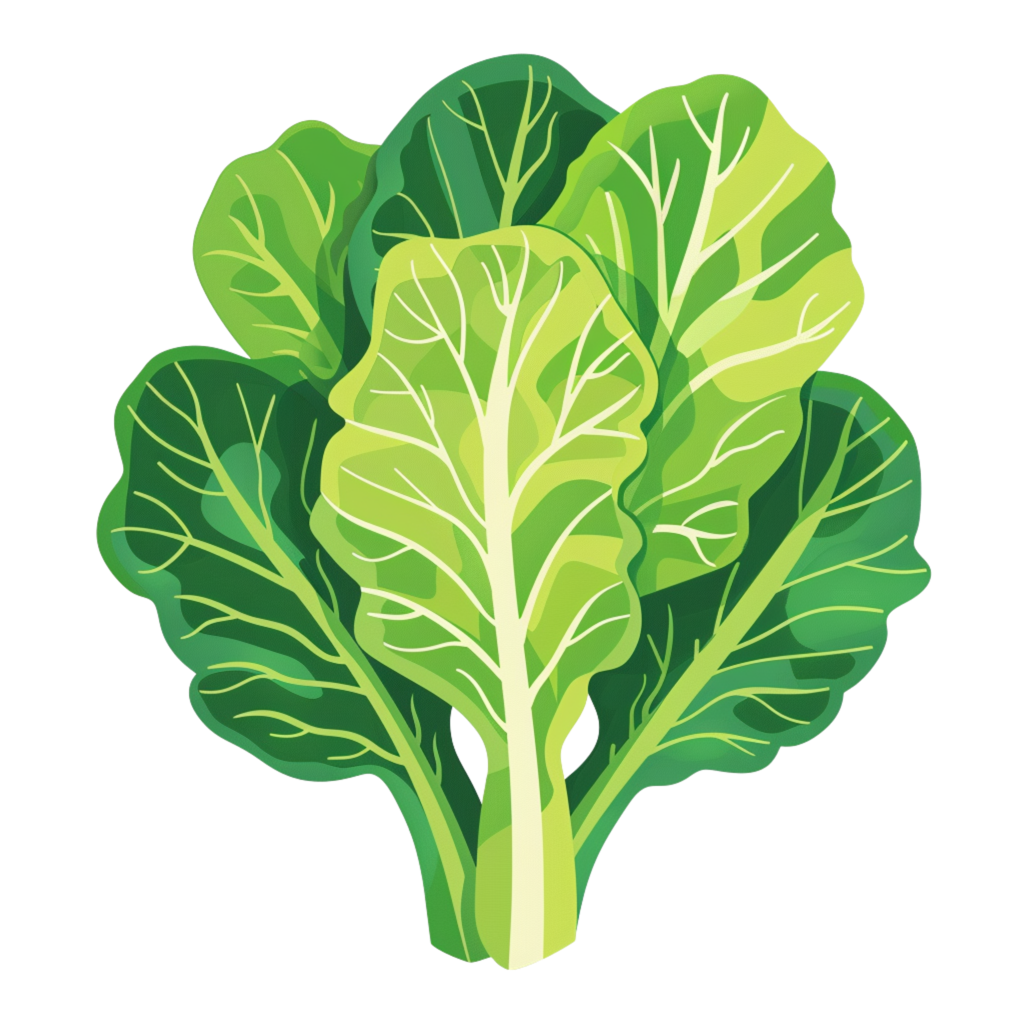




Use this half of the plate to make meals feel bigger, fresher, and easier to repeat.
Following the U.S. Dietary Guidelines for Americans [1] and USDA MyPlate [2].
If a single plate looks like enough — most of the time, it is. Here's why we don't dress this up as a diet.
02 — Why we don't sell a diet
Diets are short. Eating is forever.
We're not against discipline. We're against systems that work for three weeks, fall apart for the next thirty years, and leave the person blaming themselves.
Healthy eating is not complicated
DGA describes a healthy eating pattern, not a strict food list [1]. The pattern is what matters: most meals built around vegetables, lean protein, whole grains, and foods you genuinely enjoy. Perfect plans collapse — patterns last.
Diets do not work long-term
A Cochrane review of behavioural weight-management programmes [3] found that most participants regain weight within one to five years. The shape of the eating pattern matters far more than its first three weeks.
Build a way of eating you can live with
Sustainable beats impressive. A pattern that fits your week, your kitchen, and your budget will quietly outperform any plan you have to white-knuckle through.
Plates and food groups give you a base. The rest is your call — and that's intentional.
03 — Why you matter most
Only you know what works for you
Once the base is in place, every meaningful choice — the recipe you cook tonight, the snack you grab, the change you skip — is yours. Our job is to give you the tools and stay out of the way.
You know your preferences best
Aipa cannot taste the food, run your week, or read your hunger. You can. Change sticks when it builds on what you already enjoy — not on what looks good in a plan.
Plate first, numbers second
Calories, macros, and fiber targets are useful checks — not the starting point. Build the plate first, then look at the numbers if you want them.
Partnership, not authority
Maria's role is to direct you toward what is evidence-based, call out the myths, and share recipes and lifehacks. Your role is to decide what fits. Neither side outsources the decision.
We just made several claims about diets, satiety, and sustainability. Here is exactly where they come from.
04 — Where this comes from
How we choose what to publish
Three tiers of evidence, named openly. Anything in the body of this page traces back to one of these.
Tier 1
Government guidelines and systematic reviews
DGA 2025–2030, USDA MyPlate, WHO, EFSA, AHA, and Cochrane Reviews. These set the baseline.
Tier 2
Peer-reviewed meta-analyses
JAMA, BMJ, The Lancet, AJCN. Used to refine, contradict, or quantify Tier 1 guidance with the most current synthesis of evidence.
Tier 3
Practical experience
Maria's coaching experience and recipe testing in real kitchens. Used for translation and prioritization — never as a primary source for a health claim.
What we do not cite
- Aggregator sites like Healthline, WebMD, or Verywell — we go to the primary source instead.
- Single observational studies presented without their meta-analytic context.
- Brand blogs, supplement marketing, and PR-driven press releases.
- Anecdotal claims (“my friend lost 20 pounds…”) without a citation behind the mechanism.
- Social-media trends and influencer posts that have no primary source.
Naming our sources is half the trust. Naming our limits is the other half.
05 — Honest scope
What Aipa is not
We are a coaching companion, not a clinic. Here is where our role ends and a different specialist starts.
- Not a medical device, not a diagnostic tool, and not regulated as healthcare.
- Not a substitute for a physician, registered dietitian, or licensed mental-health professional.
- Not a clinical-nutrition therapy plan for diabetes, kidney disease, or eating disorders.
- Not a weight-loss program with promised numbers, deadlines, or shame-based pressure.
- Not a place to share medical-record-level health data — we keep meal context, not diagnoses.
06 — A note from Maria
06 — A note from Maria
Healthy eating isn't complicated, and diets do not last. I can show you the base, share recipes and lifehacks, and call out the myths. The choice of what to keep stays with you — that is the whole point.
Now — what does that look like in practice?
07 — What happens next
Site, app, you — who does what
We've described how we think about food. Here is how that shows up in what you actually use.
What Aipa does for you here, free
- Plain-language guides on the basics — calories, protein, fiber, hunger.
- Evidence-based articles on common myths and what the science actually says.
- Recipes you can cook tonight, with portions and a plate-shape tip.
- A free TDEE and BMR calculator that runs in your browser.
- FAQ-style answers to questions people actually search for.
What only the app does
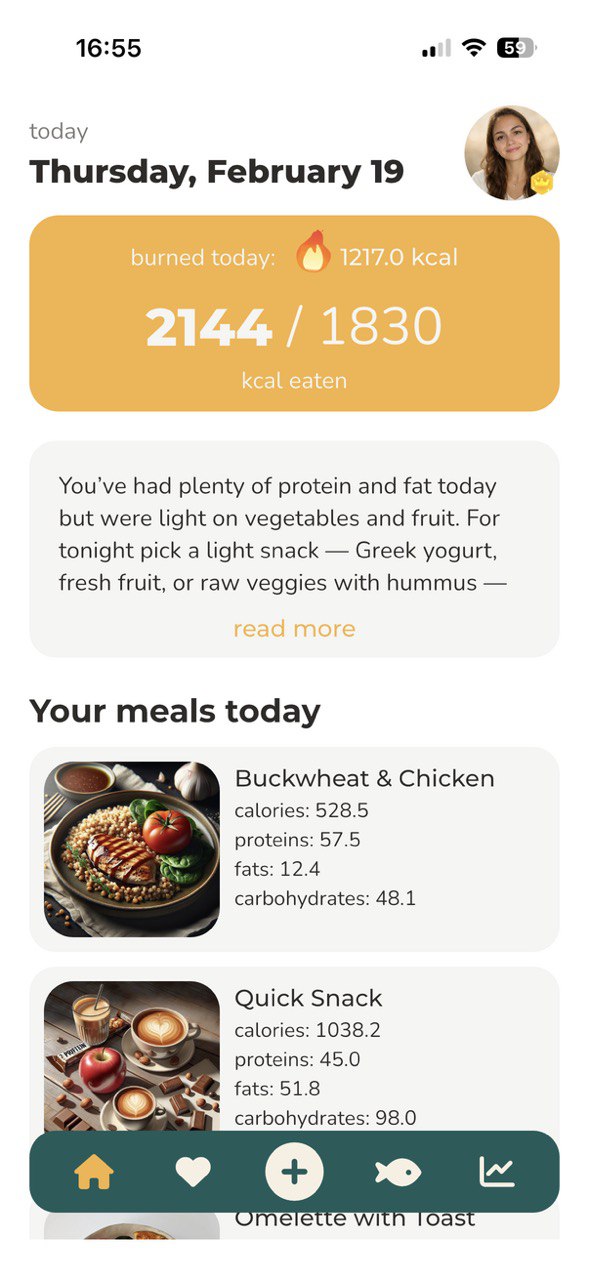
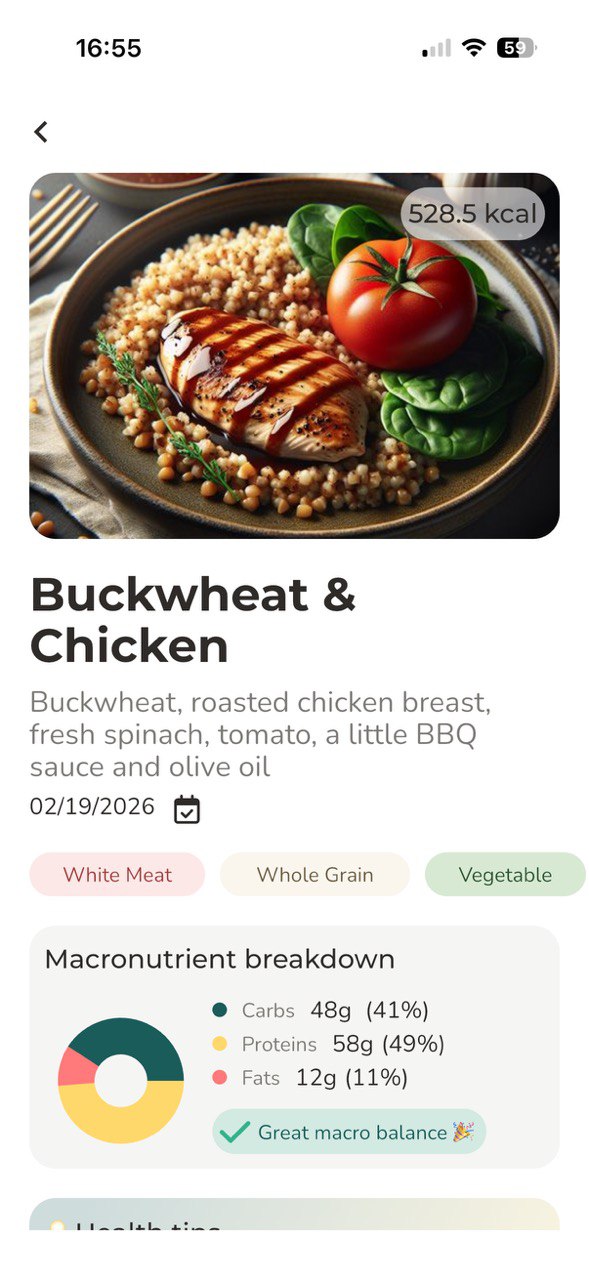
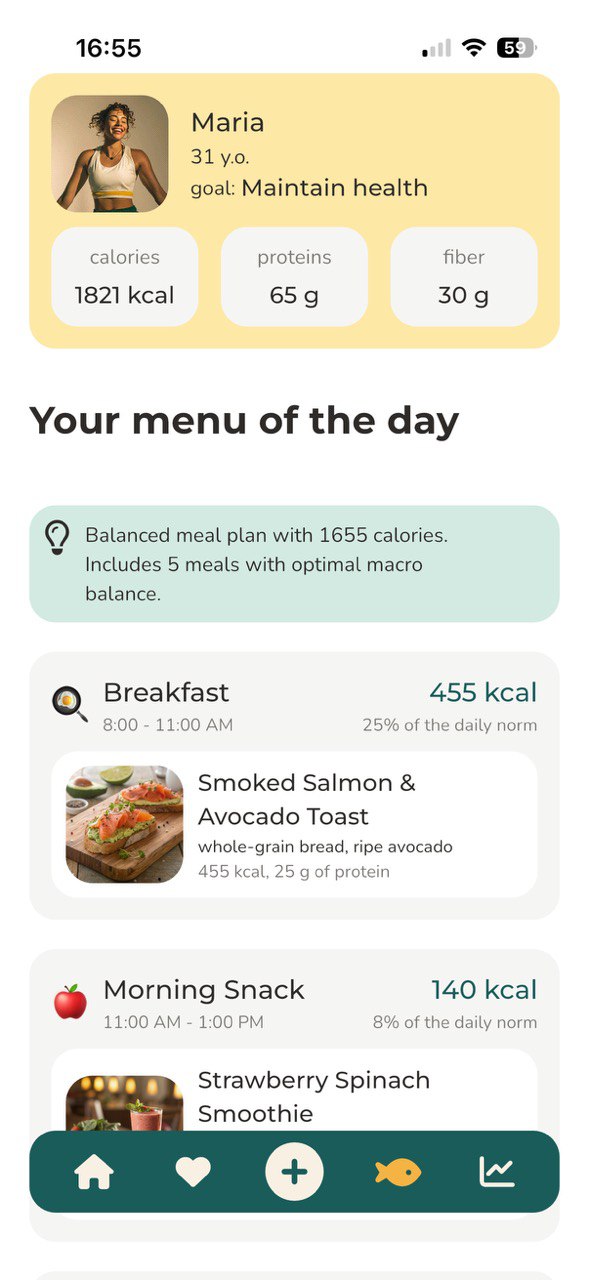
- Photo-based meal log — snap your plate and the app fills in calories, macros, and ingredients in seconds.
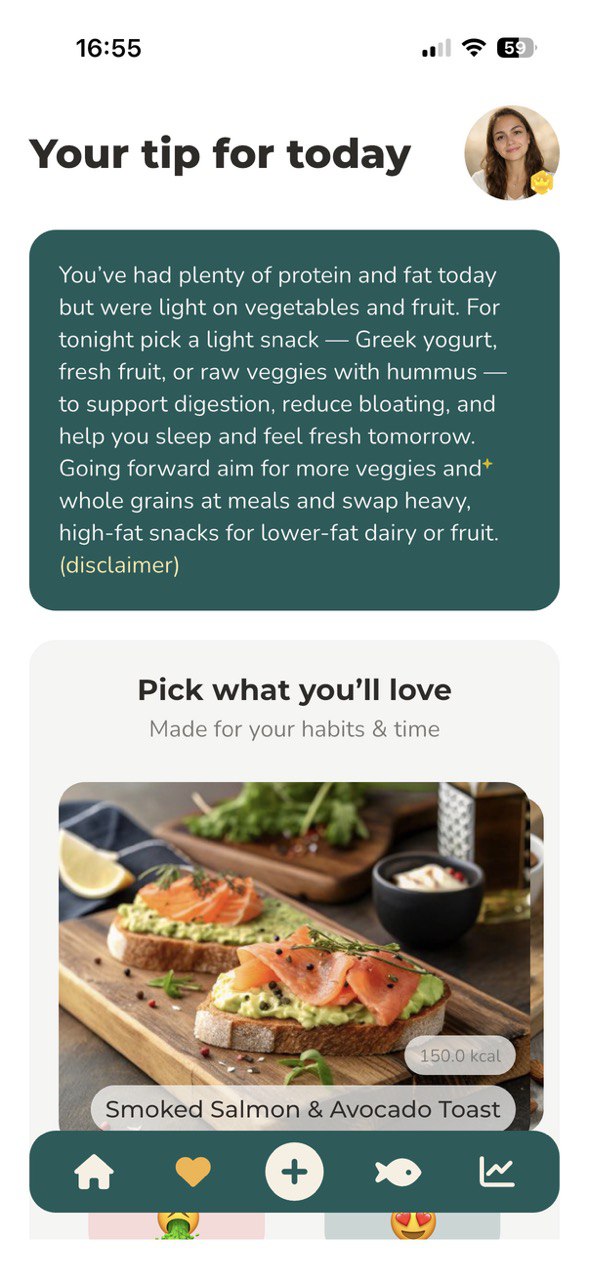
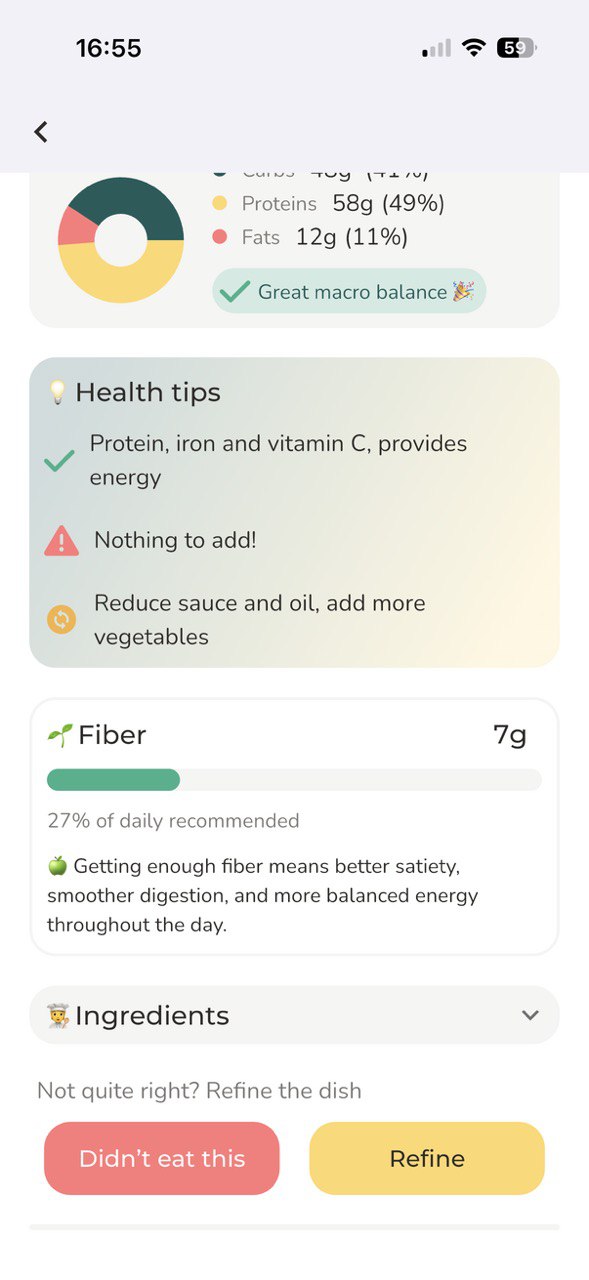
- Instant feedback after every meal — how it fits the day's balance and what you might pair it with later.
- Daily calorie and macronutrient tracking with a running balance that updates in real time.
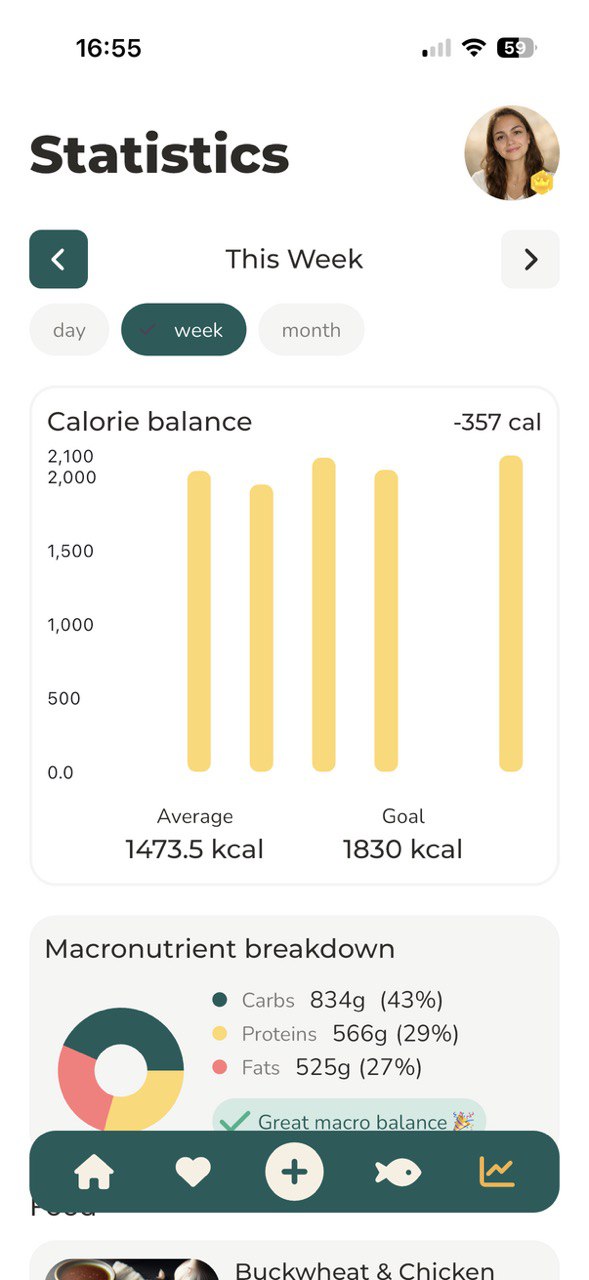
- Weekly nutrition statistics — calorie balance, macro trends, and eating patterns across the week.
- A weekly meal plan built around your preferences and calorie targets, ready to follow or adjust.
What stays yours
- What you cook, what you skip, and how strict you want to be.
- Whether to track calories, macros, or just check the plate.
- When to lean in, when to pause, and when to stop logging.
- How fast you want change — sustainable usually beats fast.
- What you take from any of this, and what you leave behind.
If you want to see how the website itself helps right now, three places to start.
08 — Read further
Three places to go from here
Each of these picks up where this page ended.
Sources